There is a time - Ruth Maddison

2009-09-24 16:28
2009-10-11 16:28
Etc/GMT

HUW DAVIES GALLERY 24 September–11 October
 
rmwebimage.jpg
 
When taking a journey by road our experience is generally of the wide view. On the road between Eden and Canberra, a road much travelled by Ruth Maddison in recent years, the geographical zones alter dramatically, from commercial fishing port, to dense forest, and into rolling dairy farms. From there up to the bleak and boulder-strewn Monaro High Plains. A dip into Cooma (gateway to the snowfields), then on to the nation’s 2-spired capital.

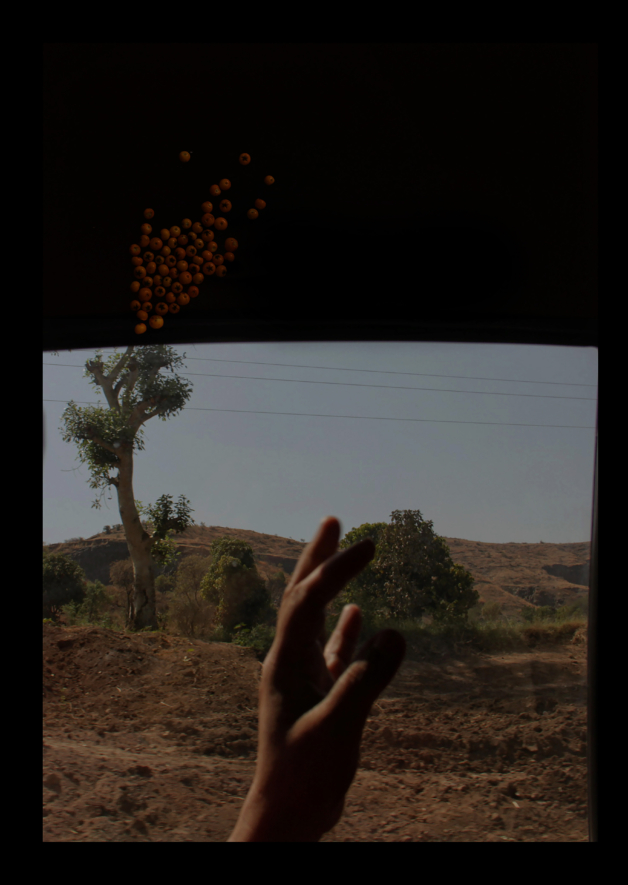
If travelling alone, we tend to a reflective state of mind. The windscreen-framed views take on a cinematic quality, a kind of mesmeric unfolding that can make it hard to pull over and break the rhythm. The landscape is also inevitably imbued with the emotional baggage we carry with us wherever we go: a stand of trees lit by late sun might seem merry or mocking, frost covered gullies promising or foreboding. But the wide view swiftly alters if we stop the car and step out. Immediately the scene changes. What had seemed smooth and homogenous is all bumps and tufts and roughness. The wind hits us, we smell the animals, the plants and the earth. The noise and rush of passing traffic is a confrontation.

In Ruth Maddison’s regular trips across the Monaro she stopped frequently to take photographs. She is drawn to the expansiveness of this unencumbered landscape, the way the opens up and seems to encourage something similar in ourselves.

“I drive across the Monaro and look at the sweep of the land and think about what was there and what has gone – time and time again. Stopping at small cemeteries scattered across the Monaro, passing through the dying towns, collecting bird and animal bones scattered all along the way, watching grass seeds blowing across the road. I am conscious of layers of history held beneath the surface of the land.”1

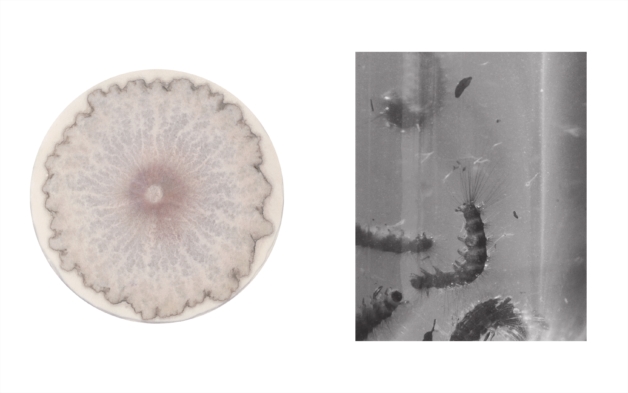
As she built up a collection of images themes emerged. As time passed these themes subtly shifted and changed. What had been a general feel for the past came into sharp focus as a reverie on mortality. Her forensic scrutiny of the carcasses that adorn the roadsides continued with the micrographia of hapless insects carried home on radiator grills, or those found, as if waiting for her, on the studio floor. In There is a time (2009) you will see flora and fauna common to Eden and Canberra that, like the artist, ‘cross the Monaro’.

Ruth Maddison’s attention helps us remember what we also may have noticed. Just as the microscope revealed a world formerly hidden to the naked eye in the 17th century, the artist can make us alert to things we do not consciously record. Having stopped her car Ruth Maddison looked death in the eye. She smelt the decay, heard the flies at work. She entered the abandoned cemeteries where the stone even crumbles, the statues tumble, and picked up pastel petals from the fabric flowers that –despite their dollar-shop foreverness – fade and scatter like the flowers they mimic.

History is writ large on this route. Small towns attest to times of brief plenty: the promise of gold, the economy of fleece. They are established at distances determined in an era when horses paced the daily work. Where rail provided a short-lived reprise. They are now towns that compete for us to “Stop Revive Survive” or to which some retire. In these empty places, Ruth Maddison finds comfort in quiet corners. She trains her camera on fine craftsmanship that has lasted the distance and the make-do that soon collapses.

“This new body of work is a departure from the people-focused documentary/portrait-based work that has informed my public practice for 30 years. This departure is the outcome of my social and professional isolation [in Eden], which I sought and have embraced. Yet I consider this work a documentary piece – I am documenting the passage of my life through a place and a time via photography and the problem solving processes it presents to me. I am documenting what it is that makes me want to go on and on with the work.” 2

One day, called to her hometown Melbourne, she collected every flower in bloom in her Eden garden. They formed an album of pressed flowers in counterpoint to the family album: a family that was about to experience loss, the album becoming more heavily laden with memory. She knew this as she walked the garden of the place she had made her home. In The day I left my garden (2009) the flowers keep their material presence on the photographer’s light box. They somehow defied representation, so they stay in this workroom place.

“Dried and pressed flowers become transparent. I thought of how I examine transparencies on a light box. Using a light box, an integral part of photographic history, strengthens the sense of presence and absence.”

Elsewhere in the exhibition, the region’s iconic Bogong moth flutters. On a soft sheer fabric commonplace3, petals write ‘dead to the world’. Ruth Maddison has taken the opportunity of this exhibition to push the boundaries of her photographic practice in content and in technique: sculpture, using fabric, etc. The digital darkroom as allowed her to extend her interest in camera-less photography as in All along the way (2009), direct scans of flattened insects, which give an extraordinary clarity of detail in the resulting glowing prints.

The movement of journeying has been captured in the video Crossing the Monaro (2009). This contemplative ‘land map’ linking Eden and Canberra across the Monaro reflects on her experience of slowly becoming a familiar with an unknown landscape.

Merryn Gates August 2009

Catalogue